Andorra’s healthcare system is widely regarded as one of the best in the world. In 2017, The Lancet’s Healthcare Access and Quality (HAQ) Index ranked Andorra first globally with a score of 95 out of 100, ahead of Iceland (94) and Switzerland (92). The WHO World Health Report 2000 also placed Andorra fourth worldwide for overall health system performance.
The system is managed by two core institutions: the CASS (Caixa Andorrana de Seguretat Social, the Andorran Social Security Fund), which handles social security contributions and reimbursements, and the SAAS (Servei Andorrà d’Atenció Sanitària, the Andorran Healthcare Service), which is responsible for the delivery of public healthcare through hospitals and health centres.
New report
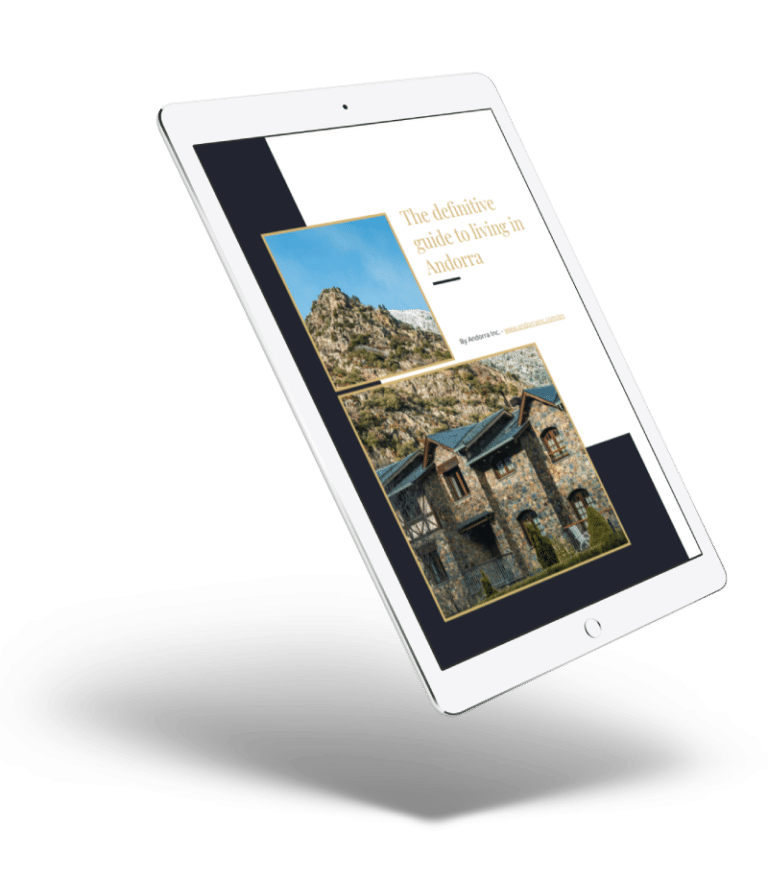
The report “The definitive guide to living in Andorra” is now available, with detailed information on Andorra’s tax framework, residence and society.
Click here to download it for free.
Together, these entities coordinate a healthcare model built on three principles established in the Andorran Constitution (Article 30) and governed by Llei 17/2008 on social security: co-responsibility, solidarity and freedom of choice. Today we cover everything you need to know about how the system works, what it costs, and what to expect as a resident or prospective resident.
How the Andorran healthcare system works
Andorra’s healthcare operates on a co-payment model: the state (through CASS) finances the majority of medical expenses, while patients cover a smaller percentage out of pocket. This co-payment is then reimbursed by bank transfer, typically within 2 to 5 business days, after submitting receipts through the CASS online portal or mobile app.
A fundamental feature of the system is the principle of free choice, which allows residents to choose their own doctors and specialists. There are both public health centres (run by SAAS) and private clinics that operate under agreements with CASS, and patients can be treated at either type of facility.
If a person does not have sufficient resources to cover their share of the co-payment, the state covers it entirely. Certain groups, including people with disabilities receiving a solidarity pension and those in situations of social exclusion, are entitled to 100% reimbursement.
The via preferent (preferred pathway)
Since September 2018, Andorra introduced the via preferent (preferred pathway), a referral system that significantly affects reimbursement rates. Under this system (established by Llei 6/2019, modifying Llei 17/2008), every CASS user must choose a metge referent (referring physician), either a general practitioner or paediatrician, who serves as the gateway to the healthcare system.
When you follow the via preferent (visiting your metge referent first and receiving a referral to specialists), you benefit from the highest reimbursement rates. If you bypass your referring physician and go directly to a specialist, reimbursement drops substantially.
There are some exceptions where you can access specialists directly without a referral and still remain within the via preferent: gynecology and obstetrics, ophthalmology and dentistry. Emergency services and hospital admissions also do not require a prior referral.
Costs and coverage: reimbursement percentages
CASS reimbursement rates depend on whether you follow the via preferent. Here is how coverage works under each scenario:
Via the preferred pathway (via preferent):
- Referring physician (metge referent) consultations. 100% covered through the third-party payment system (tercer pagador), meaning you only pay 25% of the tariff directly at the clinic, with no need to advance the full amount.
- Specialist consultations. CASS reimburses 75% of the cost.
- Diagnostic tests and examinations. Between 75% and 90% is covered, depending on the type of test.
- Physiotherapy and rehabilitation. Covered at 65%.
- Hospitalisation. CASS covers 90% of expenses. Patients only pay the remaining 10% directly, with no need to advance the full amount.
- Occupational accidents, occupational diseases and childbirth. 100% covered.
- Prescription medication. 75% covered by CASS.
- Dental care. CASS covers 75% of costs, including two dental cleanings per year.
- Non-affiliated private providers. For health expenses at establishments not associated with CASS, reimbursement is up to 33%.
Outside the preferred pathway (non-via preferent):
- Specialist consultations. Only 33% reimbursed (instead of 75%).
- Diagnostic tests and prescribed products. Only 60% reimbursed (instead of 75%).
- Rehabilitation and physiotherapy. Only 60% reimbursed (instead of 65%).
As you can see, the financial difference between following the via preferent and not doing so is significant. This is why choosing and registering your metge referent should be one of your first steps after obtaining residency.
How much does CASS cost? Contribution rates
The Andorran social security system is funded through mandatory contributions based on 22% of gross monthly salary, split between employee and employer:
- Employee contribution: 6.5% of gross salary (3% to the general/healthcare branch, 3.5% to the retirement branch).
- Employer contribution: 15.5% of gross salary (7% to the general branch, 8.5% to the retirement branch).
For self-employed workers (compte propi), the total contribution rate is also 22%, split as 10% for the general branch and 12% for retirement. The contribution base depends on net income and business turnover from the previous year, with a minimum base set at 25% of the national average salary and a maximum at 137.5%. In 2025, the average salary reference is €2,560.99 per month, meaning the standard self-employed contribution at 100% base is approximately €563 per month.
Reduced contribution bases (25%, 50%, 62.5% or 75%) are available for self-employed workers with lower net income, and there is a 50% discount during the first 12 months of activity.
Coverage for passive residents and non-workers
An important distinction for people considering a move to Andorra: passive residents (those who hold residency without exercising economic activity) are not automatically covered by CASS. Since they do not work or contribute to the social security system, they are required to hold private health insurance.
However, unemployed persons who were previously affiliated can maintain their CASS coverage by paying a voluntary contribution of approximately €200 to €400 per month, depending on their situation.
For salaried employees, affiliation to CASS is compulsory from the first day of employment. More than 90% of Andorra’s population is covered by the social security system.
The referring physician (metge referent)
Every CASS user must designate a metge referent, a general practitioner or paediatrician who becomes your primary point of contact within the healthcare system.
The metge referent provides personalised, ongoing care, monitors your health over time, and coordinates referrals to specialists. For each consultation with your referring physician, you pay only 25% of the CASS-established tariff directly at the clinic through the third-party payment system (you do not need to advance the full amount and then request reimbursement).
If your condition requires ongoing specialist attention, your metge referent can assign you a metge especialista referent (specialist referring physician). Once this initial referral is made, you can see that specialist directly for follow-up consultations without needing a new referral each time.
You can choose or change your referring physician at any time through the CASS website, at CASS offices, or directly at the doctor’s practice.
Agreements with other countries
Andorra has bilateral social security agreements with Spain, France and Portugal. These agreements cover healthcare, maternity, occupational accidents, occupational diseases, disability, retirement pensions and survivor benefits.
Medical care outside Andorra
For treatments or specialties not available in Andorra, CASS has agreements with hospitals and medical centres in Catalonia (Spain) and southern France. In these cases, the patient must be referred by their metge referent or a specialist in Andorra, and a volant mèdic (medical referral form) must be obtained from CASS before the appointment.
The same reimbursement percentages apply (75%, 90% or 100% depending on the service), provided the via preferent is followed. If you visit a non-affiliated provider abroad without CASS authorisation, reimbursement drops to 20% of the CASS tariff.
Agreement with France
The agreement with France establishes that any worker, regardless of nationality, who performs work in Andorra or in France may receive medical care in the country where they are located. It also applies to retired persons, public workers and insured dependants. This agreement covers maternity, occupational accidents and diseases, care for disabled or elderly people, family benefits and general medical care.
Agreement with Spain
The agreement with Spain, in force since 2003, allows the totalisation of contribution periods between both countries for pension rights and provides reciprocal healthcare coverage for workers and pensioners.
Agreement with Portugal
Portugal and Andorra signed a social security agreement in 1988, covering similar provisions. Given the significant Portuguese community in Andorra, this agreement is particularly relevant for pension calculations and healthcare coordination.
Can I use the European Health Insurance Card in Andorra?
No. Since Andorra is not a member of the European Union, the European Health Insurance Card (EHIC) is not valid in the Principality. Visitors from EU countries should arrange travel insurance or check whether their home country has a specific bilateral arrangement with Andorra before travelling.
It is worth noting that Andorra is currently in negotiations with the European Union regarding an association agreement that could, in the future, extend social security coordination to all EU member states.
Is it necessary to take out private insurance?
For passive residents, private health insurance is mandatory since they are not covered by CASS.
For active residents covered by CASS, private insurance is not strictly necessary but can be a sensible complement. For a monthly premium of approximately €30 to €110 per person, private insurance typically covers the patient’s share of the co-payment (the 25% for outpatient care and 10% for hospitalisation), effectively giving you 100% coverage.
Private insurance also offers supplementary benefits for salaried employees on sick leave and can provide coverage during travel outside Andorra, where CASS coverage is limited to countries with bilateral agreements.
A notable feature of Andorra’s system is that private insurance allows care at the same medical centres as publicly insured patients. The insurer simply covers the patient’s share of the co-payment.
Medical centres, hospitals and pharmacies
Andorra’s healthcare network is extensive relative to its size and population:
- Hospital Nostra Senyora de Meritxell, located in Escaldes-Engordany, is the country’s main hospital with approximately 200 beds. It provides emergency care 24/7, surgical services, maternity, intensive care and a wide range of specialties.
- 10 primary healthcare centres are distributed across the seven parishes, providing preventive care, immunisations, first aid, prenatal and child care, family planning and general consultations. Most are open on weekdays, with continuous emergency and home care services available.
- Centre Geriàtric Sant Vicenç d’Enclar provides specialised elderly care.
- Over 50 pharmacies operate across the country, one of the highest ratios per capita in the world. Pharmacies are generally open on weekends, and there are always pharmacies on duty. Prescription medications are reimbursed at 75% by CASS.
For specialties or procedures not available locally, patients are referred to affiliated hospitals in Barcelona, Lleida, Toulouse or Montpellier through the CASS referral system.
Digital health services
CASS has modernised its services significantly in recent years. Residents can now manage most interactions online through the CASS online portal or the Cartera Digital (digital wallet) app on their mobile phone. This includes:
- Choosing or changing your metge referent.
- Uploading receipts and medical forms for reimbursement.
- Requesting medical referral forms (volants mèdics) for treatment abroad.
- Carrying your digital health card on your phone for identification at clinics and pharmacies.
- Tracking reimbursement status.
Reimbursements are typically processed within 2 to 5 business days by bank transfer.
Advantages and disadvantages of Andorra’s healthcare
Advantages
- World-class quality. Ranked first globally in The Lancet’s HAQ Index and consistently among the top healthcare systems in international rankings.
- Freedom of choice. Patients can choose their own doctors and specialists.
- Minimal waiting times. Access to specialists and diagnostic tests is fast, with virtually no waiting lists.
- Generous dental coverage. Unlike neighbouring countries like Spain, CASS subsidises 75% of dental care, including two annual cleanings.
- Solidarity system. People without sufficient resources are fully covered, ensuring no one is excluded from healthcare.
- High life expectancy. Andorra has one of the highest life expectancies in the world (approximately 83-84 years).
- Cross-border coverage. Bilateral agreements with Spain, France and Portugal extend healthcare access to neighbouring countries.
Disadvantages
- Limited specialties. As a small country, certain highly specialised treatments are not available locally and require referral to hospitals in Spain or France.
- Weekend availability. Most primary healthcare centres do not operate on weekends, though emergency services are always available.
- No EHIC coverage. Visitors from EU countries cannot use their European Health Insurance Card.
- Passive residents excluded from CASS. Those without economic activity must rely entirely on private insurance.
Are you interested in residing in Andorra?
If you are considering moving to Andorra, we recommend reading the report “The definitive guide to living in Andorra”, with the most complete information on Andorran taxation, residence and society.
You can also read our guides on how to obtain Andorran tax residency, setting up a company in Andorra and Andorra’s corporate tax system.
Our team of specialists can help you through the entire process. Contact us to discuss your situation.
You can contact us without obligation in the following ways:
- By sending an email to [email protected]
- Or by filling out the form below:
 All communications are encrypted and will be treated with absolute confidentiality. Your data will never be shared with third parties.