
For various reasons, we are seeing more and more Americans interested in moving their residence to Andorra.
Whether you are a digital entrepreneur, an investor, or a retiree, understanding Andorra’s benefits can help you make an informed decision about relocating from the USA.
This guide explains what our small but lovely country offers, the unique advantages of its lifestyle, its attractive taxation system, and the various residency options available to Americans.
But what is Andorra?
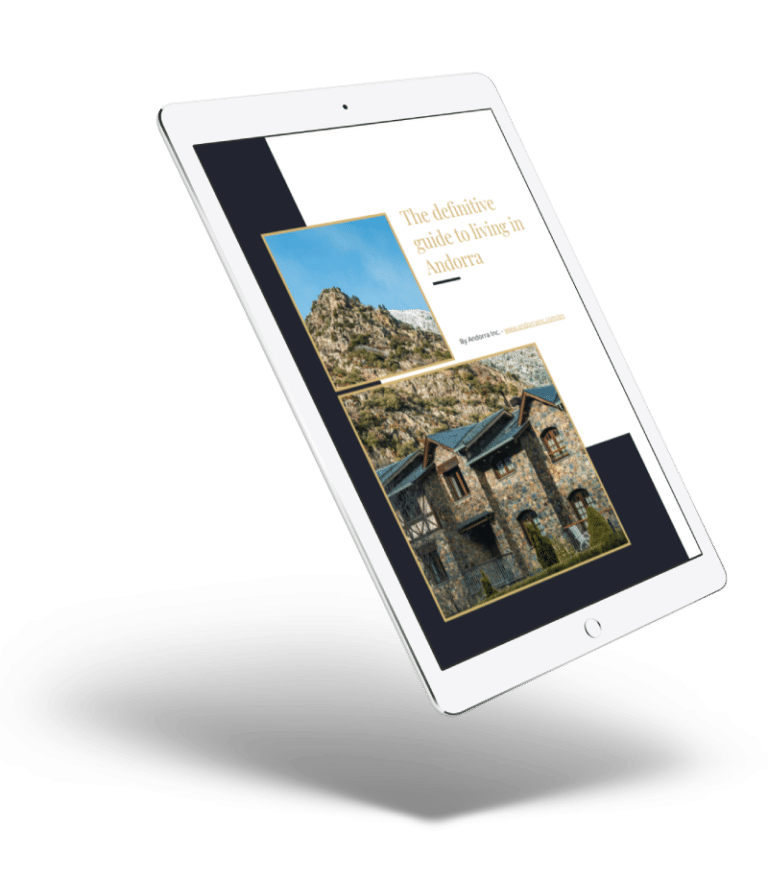
Andorra is a small principality nestled in the Pyrenees between Spain and France. Despite its modest size, it has a rich blend of modern amenities, a secure environment, and natural beauty. The country is particularly renowned for its ski resorts and mountain sports, making it a paradise for outdoor enthusiasts.
Life in Andorra is marked by a peaceful pace and a strong sense of community. Our country is proud to offer a high standard of living with excellent healthcare and education systems.
And although you may think that so many benefits must be inaccessible, the truth is that real estate prices and the cost of living are very competitive compared to the ones in the United States.
Advantages
- Low criminality creates a safe and secure living environment.
- The country is a paradise for snow and mountain sports enthusiasts, with world-class ski resorts and outdoor activities available year-round.
- Stunning landscapes and breathtaking natural scenery provide a high quality of life.
- Andorra is well connected to Spain and France; Barcelona and Toulouse airports are only a few hours away by car, with direct flights to the United States and major European cities.
- A good healthcare and education system ensures that families have access to essential services.
- The cost of living and real estate is much lower than in richer countries, yet comparable to Spanish capitals.
- Andorra’s attractive taxation system (detailed below) provides significant fiscal benefits.
Disadvantages
- For those who crave a vibrant cultural and nightlife scene, Andorra may feel too quiet; however, the bustling city life of Barcelona is just a short drive away.
- Obtaining residency in Andorra can be challenging due to its strict requirements and limited quota.
- Andorra is not part of the European Union or the Schengen area, which means non-EU residents (including Americans) are subject to standard entry rules when crossing into Spain or France.
Taxation benefits
One of the main attractions of Andorra is its highly favorable taxation regime. The principality offers a personal income tax (IRPF) with a maximum rate of just 10%. Income up to €24,000 per year is completely exempt, and a bonification of up to €800 effectively reduces the tax burden on income between €24,000 and €40,000.
Corporate tax is also capped at 10%, and even the general indirect tax (IGI, similar to VAT) is 4.5%, significantly lower than in many neighboring countries.
Another great advantage is that dividends from Andorran companies are not taxed if corporate tax has already been paid at the entity level. Capital gains are also exempt in many cases. However, it is important to note that foreign dividends (for example, dividends from US companies) are subject to the 10% IRPF as savings income, with only the first €3,000 of total savings income exempt.
For more information, read our articles on dividend tax in Andorra and on capital gains.
These tax benefits make Andorra an appealing option for those who can work remotely.
Understanding US nationality-based taxation
Although Andorra’s tax regime is very advantageous, United States citizens must remember that the US taxes based on citizenship, not just residency. This means that if you hold a US passport, you are generally required to file an annual tax return with the Internal Revenue Service (IRS), regardless of where you live.
Even if you become a tax resident in Andorra, you must still fulfill US tax obligations, which may include:
- Filing an annual tax return (Form 1040) and reporting worldwide income.
- Paying US taxes unless you qualify for certain exemptions or credits, such as the Foreign Earned Income Exclusion (FEIE) or the Foreign Tax Credit (FTC).
- Reporting foreign bank accounts over certain thresholds under FBAR requirements.
While the US–Andorra tax landscape can be managed with proper planning, the absence of a specific US–Andorra double taxation treaty may pose additional challenges, especially for income types like dividends. However, many Americans still find that relocating to Andorra significantly reduces their overall global tax burden, thanks to the principality’s lower rates.
The problem of the double taxation treaties
Double Taxation Treaties (DTTs) are agreements between two countries intended to avoid or reduce double taxation on income, such as dividends. Under these treaties, dividends are usually not taxed at source or are taxed at a reduced rate, preventing punitive levels of taxation when you live in one country and invest in another.
Andorra has been expanding its DTT network rapidly in recent years and now counts 21 signed agreements, including treaties with France, Spain, Portugal, the United Kingdom, Luxembourg, the Netherlands, Hungary, the Czech Republic, Croatia, South Korea, Lithuania, Latvia, Montenegro, Romania, Iceland, Monaco, Liechtenstein, Malta, Cyprus, the UAE, and San Marino. Negotiations with other countries such as Austria, Germany, and Belgium are ongoing.
However, there is no DTT between the United States and Andorra. As a result, if you receive dividends from a US company while living in Andorra, you may face:
- A withholding tax at source by the US (often 30% for non-resident aliens).
- Additional Andorran taxation of up to 10% for foreign dividends under the IRPF, although Andorra allows deductions for taxes paid abroad to mitigate double taxation.
Without a formal tax treaty, you cannot reduce the 30% US withholding on dividends to a lower treaty rate. This means you might end up paying a higher total tax on those dividends. Nonetheless, Andorra’s broad tax benefits (such as 0% tax on domestic dividends, no wealth tax, and no inheritance tax) often still make it a very appealing destination for many Americans, particularly those whose income comes primarily from business activities rather than US-sourced investments.
Is Andorra a tax haven?
Main article: Andorra Tax Haven
Despite its low tax rates, Andorra is not considered a traditional tax haven.
Over the years, the principality has made significant efforts to improve transparency and adhere to international tax standards. Reforms have been introduced to eliminate banking secrecy, and Andorra has been working closely with global institutions to ensure compliance with international regulations.
These measures have helped Andorra shed much of the negative image associated with tax havens. Today, Andorra is recognized for its commitment to transparency and its modern, well-regulated fiscal framework, making it a legitimate choice for those seeking to optimize their tax situation.
Getting the residency
Relocating to Andorra from the USA requires obtaining the appropriate residency permit. The residency process is designed to ensure that only those who meet specific financial and personal requirements are granted access.
There are several types of residency permits available in Andorra. The main options include:
- Active residency: for individuals who intend to work in Andorra, either as employees or as self-employed entrepreneurs. Self-employed applicants must hold more than 34% of the shares in an Andorran company (raised from 20% by Llei 5/2025), register the company within three months of obtaining the permit, and make a €50,000 non-refundable payment to the Andorran Financial Authority (AFA). This amount was previously a refundable deposit, but following the approval of the Llei de continuïtat i consolidació (January 2026), it is now a definitive payment that is only returned if the initial authorization is denied. Active residents must spend at least 183 days per year in the country.
- Passive residency: often compared to a “Golden Visa,” this permit is ideal for retirees, investors, and high-net-worth individuals who live on passive income or income generated abroad. Following the January 2026 reform, passive residency now requires a minimum investment of €1,000,000 in Andorran assets (previously €600,000). If part of the investment is made in real estate, the minimum property value is €800,000 and it must be used as a primary residence. Applicants must also pay €50,000 to the AFA (non-refundable), plus €12,000 per dependent, also non-refundable. The minimum physical presence is 90 days per year.
- Digital nomad visa: a newer option for those who work remotely for companies or clients outside of Andorra. This permit is designed for modern professionals who do not need to engage with the local labor market directly. It does not require an AFA payment or establishing a local company, though it does require prior approval from the Ministry of Economy.
- Family reunification: if a family member already resides in Andorra, it is possible to apply for residency under the family reunification category. This option facilitates the process for spouses, children, or dependent relatives.
- Residency for health reasons: in cases where individuals need to relocate for medical or health-related support, this special permit can be obtained. It is designed to help those who require access to Andorra’s high-quality healthcare services.
The active and passive residency permits are the most commonly used for those interested in benefiting from Andorra’s low taxation. Broadly speaking, active residence is for those who work for others or themselves, while passive residence is designed for rentiers with a certain purchasing power.
Foreign investment tax on real estate
Americans (and all non-residents) purchasing property in Andorra should be aware of the foreign investment tax on real estate. Following the Llei de continuïtat i consolidació (January 2026), the rates were increased to 6% on the first property and 10% on any subsequent properties. This tax is separate from, and in addition to, the standard property transfer fees.
Keeping the tax residency
Once you obtain an administrative residency permit in Andorra, maintaining tax residency is essential to continue enjoying the favorable tax rates. Tax residency in Andorra is determined by several factors, including the number of days you spend in the country and the location of your economic and personal interests.
Although some permits, like passive residency, may have a minimum stay requirement of 90 days, it is important to note that to secure tax resident status, you must ensure that your main economic interests remain in Andorra. This means that if you are spending significant time abroad, you risk losing your status as an Andorran tax resident.
To preserve your tax residency, it is advisable to avoid spending more than 183 days per year in any other country. Keeping your center of economic and personal interests in Andorra is key. Regular visits, maintaining a local bank account, and having strong family and social ties within the principality will help reinforce your tax residency status.
Thinking of moving to Andorra from the USA?
If you are considering a move to a country where fiscal pressure is lower and your quality of life can improve dramatically, Andorra might be the ideal choice for you. With its combination of stunning natural beauty, a safe environment, competitive living costs, and one of the most attractive taxation systems in Europe, many Americans are finding it an appealing option.
However, relocating to Andorra involves careful planning and a thorough understanding of residency requirements, tax regulations, and US-specific obligations. We recommend consulting with a local expert who can guide you through the process and ensure that all legal and financial criteria are met, while also helping you navigate your US tax filings.
If you have any questions or need personalized advice, do not hesitate to contact us.
Sources
- Llei 5/2014 – Personal Income Tax Law (Consell General)
- Llei 5/2023 – Direct Tax Reform (Consell General)
- Llei de continuïtat i consolidació – Omnibus 2 (Consell General, January 2026)
- Llei 5/2025 – Immigration Reform (BOPA)
- Double Taxation Treaties – Full List (Govern d’Andorra)
- Active Residence Requirements (Govern d’Andorra)
- Passive Residence Requirements (Govern d’Andorra)
- IRS – Withholding on Specific Income
 All communications are encrypted and will be treated with absolute confidentiality. Your data will never be shared with third parties.